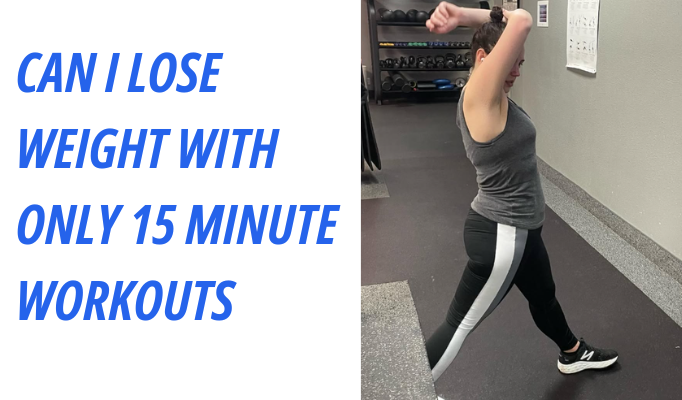
Short answer: yes, but not for the reason most people think. It’s not magic, and it’s not because 15 minutes “tricks” your metabolism into burning fat all day.
It works because 15 minutes is a length of time you’ll actually do, consistently, instead of skipping the hour-long session you dreaded and kept pushing to “tomorrow.” Weight loss has always come down to consistency over intensity, and short workouts remove the biggest excuse standing between you and consistency.
Why People Assume You Need Long Workouts to Lose Weight
There’s this old idea floating around gyms and fitness magazines that you need to be drenched in sweat for 60-90 minutes for a workout to “count.” It’s not entirely baseless; longer sessions can burn more total calories in that single session.
But that logic misses the bigger picture. Most people who try to commit to long daily workouts burn out within a few weeks. They miss a day, feel guilty, miss another, and eventually stop entirely.
Weight loss isn’t won in any single workout. It’s won over months, through whatever you can actually sustain. A 15-minute workout you do five days a week beats a 60-minute workout you do once before quitting.
The Math Behind 15-Minute Workouts
Calories matter, sure, but they’re only part of the story. A solid 15-minute workout, especially something like HIIT (high-intensity interval training) or a fast-paced strength circuit, can burn anywhere from 100 to 200 calories depending on your weight, effort level, and what exercises you’re doing.
That doesn’t sound huge on its own, but stack it daily, and you’re looking at 700-1,400 calories a week just from movement, not counting the after-burn effect (excess post-exercise oxygen consumption, or EPOC) where your body keeps burning slightly more calories for hours after you stop.
But here’s the part people skip over: weight loss is really driven by your overall calorie balance across the day and week, not the workout in isolation.
A 15-minute workout can boost your metabolism, build muscle that burns more calories at rest, and, maybe most importantly, put you in a mindset where you’re more likely to make better food choices on the days you exercise.
What Kind of 15-Minute Workout Actually Works
Not all 15 minutes are created equal. Slowly strolling on a treadmill for 15 minutes won’t do much. But these styles can genuinely move the needle:
HIIT (High-Intensity Interval Training): Short bursts of all-out effort followed by brief rest. Think 30 seconds of jumping jacks, 30 seconds rest, repeat with different exercises. This is probably the most efficient way to use 15 minutes for weight loss.
Bodyweight circuits: Push-ups, squats, lunges, planks, mountain climbers done back-to-back with minimal rest. Builds strength and keeps your heart rate up.
Tabata workouts: A specific HIIT format, 20 seconds of work, 10 seconds of rest, repeated for 4 minutes per exercise. Brutal but effective.
Jump rope intervals: Underrated and incredibly efficient for burning calories in a short window.
Incline walking or stair climbing: Lower intensity but still useful, especially if you’re new to exercise or recovering from injury.
The common thread is intensity. When you only have 15 minutes, you need to actually push yourself during that window rather than easing through it.
Why Consistency Beats Intensity (Most of the Time)
Here’s something a lot of fitness content won’t tell you straight: the “best” workout is the one you’ll actually keep doing. A perfectly designed 45-minute program means nothing if you do it twice and then stop. A simple 15-minute routine you do most days for six months will outperform almost any “optimal” program you abandon.
This is why 15-minute workouts can work so well for weight loss specifically. They lower the barrier to entry so much that skipping becomes the harder choice, not the easier one. You can do them before work, on a lunch break, or squeeze them in while dinner is cooking. There’s no excuse left to hide behind.
What You Need to Pair With Short Workouts
Workouts alone, short or long, aren’t going to get you to your goal if your diet doesn’t support it. Weight loss ultimately comes down to a calorie deficit, burning more than you take in. A 15-minute workout helps tip that balance, but if you’re eating significantly more calories than you burn, the workout alone won’t outpace that.
So if you’re relying on 15-minute sessions, pay attention to:
- Protein intake – helps preserve and build muscle, which keeps your metabolism humming
- Overall daily movement – walking more, taking the stairs, standing instead of sitting
- Sleep – poor sleep messes with hunger hormones and recovery
- Portion awareness – you don’t need to obsess over calories, but be honest with yourself about portions
Short workouts are a powerful piece of the puzzle, not a free pass to eat however you want.
Sample 15-Minute Routine to Try
If you want something to start with today, here’s a no-equipment circuit you can do anywhere:
- Jumping jacks – 45 seconds, rest 15 seconds
- Bodyweight squats – 45 seconds, rest 15 seconds
- Push-ups (modified if needed) – 45 seconds, rest 15 seconds
- Mountain climbers – 45 seconds, rest 15 seconds
- Plank hold – 45 seconds, rest 15 seconds
Repeat the entire circuit two more times. That’s roughly 15 minutes, and by the third round, you’ll feel it.
The Bottom Line
Yes, you can lose weight with only 15-minute workouts. They won’t replace a thoughtful diet, and they’re not some secret loophole that beats the laws of physics. But what they do is keep you moving consistently, build muscle, support your metabolism, and make exercise something you can stick with for the long run instead of something you dread and avoid.
For most people trying to lose weight, that consistency matters more than chasing the “perfect” hour-long workout they’ll quit in two weeks.
FAQs
Is 15 minutes of exercise a day enough to see real results?
It can be, especially if you’re consistent and the workout is intense enough to challenge you. You likely won’t see dramatic changes overnight, but over weeks and months, 15-minute daily sessions add up significantly, both in calories burned and fitness gained.
What’s the best type of 15-minute workout for fat loss?
HIIT and bodyweight circuits tend to be the most effective because they keep your heart rate elevated and combine cardio with strength work. The key is intensity, not just movement.
Do I still need to watch what I eat if I’m doing short workouts?
Yes. Exercise alone rarely creates the calorie deficit needed for weight loss if your diet isn’t in check. Short workouts help, but pairing them with mindful eating gets you results much faster.
Can beginners start with 15-minute workouts?
Absolutely. In fact, it’s often a smarter starting point than jumping into long workouts, since it reduces the risk of burnout or injury while you build the exercise habit.
How soon will I notice weight loss from 15-minute workouts?
This varies by person, but many people notice changes in energy and how their clothes fit within 3-4 weeks, with more visible weight changes typically showing up around the 6-8 week mark, assuming diet is also on track.

I am Liam Brooks, a fitness writer passionate about simple home workouts, beginner-friendly fitness tips, and healthy daily habits. My goal is to make fitness easier, more practical, and accessible for everyone.