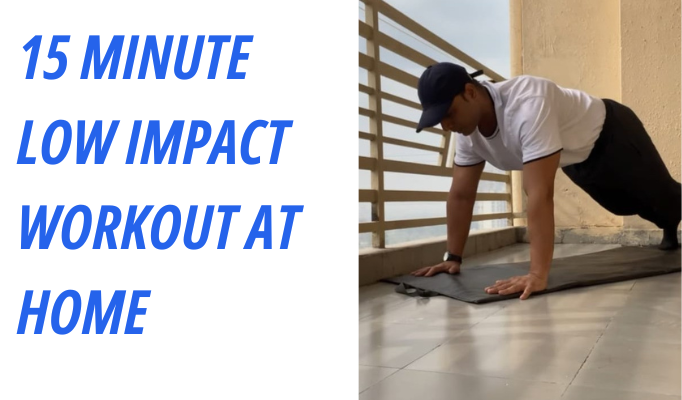
15 Minute Low Impact Workout At Home (That You’ll Actually Want To Do Again)
Let’s be honest, some days, the gym feels like another planet. Between work, errands, and the very real pull of your couch, carving out an hour to exercise can feel impossible. But here’s what most people don’t realize: you don’t need an hour. You don’t even need equipment. Fifteen minutes of low impact movement done consistently will do more for your body than three intense sessions a week that you dread and eventually quit.
This is that workout.
Why Low Impact Isn’t “Easy Impact”
People tend to confuse low impact with low effort, and that’s a mistake. Low impact simply means your joints aren’t taking a beating no jumping, no heavy pounding on your knees and hips. What it doesn’t mean is that your heart rate stays flat or your muscles get off easy.
If you’ve been dealing with knee pain, recovering from an injury, or you’re just starting out after a long break, low-impact workouts are genuinely your best friend. And if you’re someone who’s been grinding through high-intensity sessions every day and wondering why you’re always sore, this might be the reset your body is quietly begging for.
What You’ll Need
Nothing fancy. A small patch of floor, comfortable clothes, and maybe a water bottle nearby. That’s it. No dumbbells, no resistance bands, no yoga mat required (though a mat helps if your floor is hard).
Set a timer for 15 minutes, and let’s go.
The 15 Minute Workout
Do each exercise for 45 seconds, rest for 15 seconds, then move to the next. Go through the circuit twice if time allows, but even once through is a solid session.
1. March in Place (Warm-Up)
Start slow. Lift your knees to about hip height, swing your arms naturally, and just get the blood moving. This isn’t about intensity; it’s about waking up your body and telling it something good is about to happen.
45 seconds. Breathe easy.
2. Squat to Chair
Stand in front of a sturdy chair or couch. Lower yourself down slowly, like you’re about to sit, but stop just before you touch the seat, then stand back up. This works your quads, glutes, and core without any impact whatsoever.
If balance is a concern, go ahead and actually sit, then stand back up. That counts. Don’t let anyone tell you otherwise.
45 seconds. Keep your chest up and your weight in your heels.
3. Standing Side Leg Raises
Hold onto a wall or counter if you need to. Lift one leg out to the side slowly, with control, and bring it back down. Switch sides halfway through.
This one quietly does a lot. Your hip abductors, outer thighs, and core all kick in to stabilize you. It looks gentle. It isn’t.
45 seconds per side.
4. Modified Push-Up (Wall or Knee)
If wall push-ups feel too easy, drop to your knees on the floor. If they don’t, the wall version is perfectly effective. Don’t let anyone make you feel like it doesn’t count.
Keep your body in a straight line, lower your chest toward the wall or floor, and press back up. Chest, shoulders, and triceps are all working here.
45 seconds.
5. Step Touch
Think of this as the most understated cardio move you’ve ever done. Step your right foot to the right, bring your left foot to meet it. Then step left, bring your right foot over. Add a little arm swing. Speed it up as you get comfortable.
It looks like something your aunt does at a community center, but your heart rate will quietly climb, especially by the second round.
45 seconds.
6. Glute Bridges
Lie on your back, knees bent, feet flat on the floor. Press through your heels and lift your hips toward the ceiling. Squeeze at the top, lower back down slowly.
Your glutes, hamstrings, and lower back all benefit from this one. If you sit at a desk most of the day, your glutes are probably underactive. This move wakes them right back up.
45 seconds.
7. Standing Bicycle Crunch (Slow)
Stand tall, hands behind your head. Bring your right knee up toward your chest while rotating your left elbow to meet it. Alternate sides slowly; the key here is the rotation, not the speed.
Your obliques, hip flexors, and core are all engaged. Going slow actually makes this harder than rushing through it.
45 seconds.
8. Cat-Cow Stretch (Cool-Down)
Get on all fours. On your inhale, drop your belly toward the floor and lift your head, that’s cow. On your exhale, round your spine toward the ceiling and tuck your chin in; that’s cat. Move with your breath. Take your time.
After 12 or so minutes of work, your spine will thank you for this. It’s not filler it’s recovery, and recovery matters.
45 seconds. As slow as you like.
A Few Honest Notes
You don’t have to do this perfectly. The modified versions of every exercise exist for a reason. If your knees talk back during squats, do fewer. If the wall push-ups feel too easy, move to the floor. Adapt.
Consistency beats intensity, always. Fifteen minutes four times a week is genuinely better than a brutal hour-long session once a week that leaves you hobbling. Your body responds to regularity more than punishment.
You might not feel “wrecked” after this; that’s fine. We’ve been sold the idea that a workout only counts if you can barely walk afterward. That’s not true, and for most people, that approach leads straight to burnout. Low impact training can improve cardiovascular health, build strength, reduce joint pain, and boost your mood. It just does it without drama.
The Bigger Picture
Starting with 15 minutes isn’t settling. It’s actually one of the smarter things you can do. Once the habit is locked in, once your brain starts expecting that 15-minute window, you can extend it if you want to. Or not. Plenty of people find that this is exactly what they need and stick with it long term.
The goal isn’t to look like an athlete. The goal is to feel better in your body, move a little more, and do something today that your future self will quietly appreciate.

I am Liam Brooks, a fitness writer passionate about simple home workouts, beginner-friendly fitness tips, and healthy daily habits. My goal is to make fitness easier, more practical, and accessible for everyone.