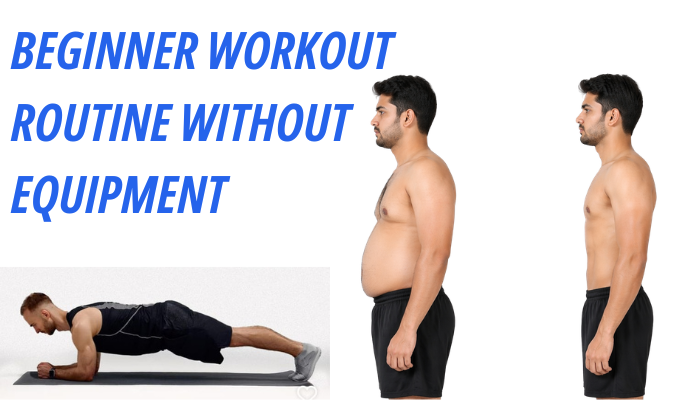
Beginner Workout Routine Without Equipment (Yes, You Can Actually Do This)
Let me be straight with you, when I first started working out, I had zero equipment, zero money for a gym membership, and honestly, zero idea what I was doing. I figured I needed dumbbells, machines, or at least a pull-up bar to get anywhere. Turns out, I was wrong about all of it.
Your body is more than enough to get you started. In fact, for most beginners, a gym full of equipment is the last thing you need. Too many options, too much confusion, too easy to overcomplicate something that should be simple.
So here’s the no-fluff version of how to actually build a workout routine from scratch with nothing but the floor under you.
First, A Word on Expectations
You’re not going to look like a fitness influencer in four weeks. Anyone who tells you otherwise is selling something.
What you will notice in four to six weeks: you’ll sleep better, feel less sluggish, have more energy during the day, and the exercises that left you gasping will start to feel manageable. That’s the real reward, early on, not the mirror, but how you feel.
Keep that in mind on the days you don’t want to do it.
How to Structure Your Week
When you’re just starting out, three days a week is plenty. More is not better at this stage. Recovery is where your body actually adapts and gets stronger. Jumping straight into five or six days is a classic beginner mistake that leads to burnout or injury within the first month.
A simple structure that works:
- Monday > Workout
- Tuesday > Rest or a light walk
- Wednesday > Workout
- Thursday > Rest
- Friday > Workout
- Saturday/Sunday > Rest, stretch, or go for a walk if you feel like it
Three days, full-body each time. That’s it. Don’t overthink it.
The Beginner Routine
Each session, you’ll work through the same set of exercises. This kind of consistency is intentional when you repeat the same movements; you get better at them faster, and you can actually track your progress.
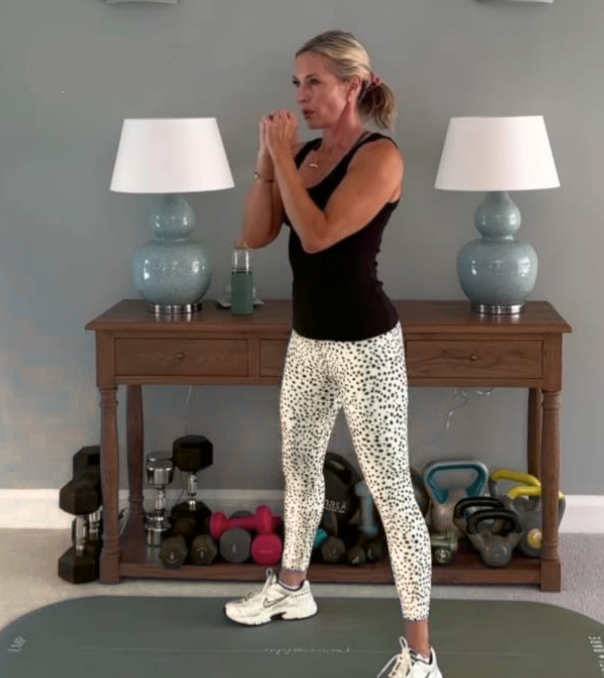
Warm-Up (5 Minutes)
Never skip this. A cold body is an injury-prone body.
- Jumping jacks > 30 seconds
- Arm circles > 15 seconds forward, 15 seconds back
- Hip circles > 10 each direction
- Leg swings > 10 each leg
- High knees > 30 seconds
Nothing fancy. You’re just waking your body up and getting blood moving.
The Main Workout
Do each exercise for the recommended sets and reps, resting 60–90 seconds between sets. If a move feels too easy, slow it down. If it feels impossible, use the easier variation listed.
1. Squats: 3 sets of 10–15 reps
The squat is foundational. Feet shoulder-width apart, toes pointed slightly out. Sit back like you’re lowering into a chair, keep your chest up, and drive through your heels to stand back up. Don’t let your knees cave inward.
Too hard? Hold onto a wall or door frame for balance. Too easy? Pause at the bottom for 3 seconds before standing up.
2. Push-Ups: 3 sets of 8–12 reps
Hands slightly wider than shoulder-width, body in a straight line from head to heels. Lower your chest to the floor, then push back up. The key thing most beginners miss: don’t let your hips sag or shoot up. One straight line throughout.
Too hard? Drop to your knees. There’s zero shame in this; it’s a legitimate variation, not a cop-out. Too easy? Try a slow 3-second descent before pushing up.
3. Glute Bridges: 3 sets of 12–15 reps
Lie on your back, knees bent, feet flat on the floor. Push through your heels and lift your hips until your body forms a straight line from knees to shoulders. Squeeze at the top, then lower back down slowly.
This one works your glutes and lower back, two areas that get neglected and then complain loudly about it later in life.
4. Plank: 3 sets of 20–40 seconds
Forearms on the ground, body straight, core braced. Hold. Breathe. Don’t hold your breath — that’s a habit people develop when things get hard, and it makes it worse.
Too hard? Drop to your knees. Too easy? Increase the hold time by 5 seconds each week.
5. Mountain Climbers: 3 sets of 20 reps (10 each leg)
Start in a high push-up position. Drive one knee toward your chest, then the other, alternating in a running motion. Keep your hips down and your core tight. Go at a pace that lets you maintain form. This isn’t a race.
6. Superman Hold: 3 sets of 10 reps, hold each for 2 seconds
Lie face down, arms extended overhead. Lift your arms, chest, and legs off the ground at the same time, squeeze at the top, hold briefly, then lower back down. Your back needs work, too. Most people ignore it completely until it gives them a problem.
Cool Down (5 Minutes)
Stretch what you worked. Hold each stretch for at least 30 seconds:
- Quad stretch > stand on one leg, pull the other foot toward your glutes
- Hamstring stretch > seated, reach toward your toes
- Hip flexor stretch > drop into a lunge and sink forward
- Child’s pose > kneel, sit back on your heels, reach arms forward
- Chest opener > clasp hands behind your back, lift, and open
Cooling down isn’t optional. It’s when your heart rate comes down, your muscles begin to recover, and you reduce next-day soreness.
Progressing Over Time
Here’s the thing about bodyweight training that surprises people: it doesn’t plateau as fast as you’d expect. There’s a huge gap between a sloppy push-up and a slow, controlled, perfect push-up. And then there’s the gap between that and a one-arm push-up. The progressions keep going.
In the first month, focus purely on form. Don’t chase numbers.
In weeks five through eight, start adding reps or an extra set. If you hit the top of the rep range comfortably, move to the harder variation.
A few progression paths worth knowing:
- Squats → Pause squats → Single-leg squats (pistol squats)
- Push-ups → Decline push-ups → Archer push-ups → One-arm push-ups
- Plank → Longer holds → Plank with leg lifts → Side plank
You could spend six months just on these movements and still be making progress.
The Things Nobody Tells You
You’ll be sore the first week. Especially in your legs after squats. This is called DOMS (delayed onset muscle soreness), and it peaks around 24–48 hours after exercise. It fades. Light walking actually helps more than resting completely.
Consistency beats intensity every time. A moderate workout three times a week, done consistently for three months, will get you further than a brutal workout done inconsistently. Show up, even on the days you don’t feel like it.
Sleep matters as much as the workout. Your body rebuilds muscle while you sleep. Get at least seven hours. This isn’t optional if you want to see results.
You don’t need to be sore to have had a good workout. Soreness is not a reliable indicator of progress. It’s more of a sign that your body encountered something unfamiliar. As you get fitter, you’ll be less sore, and that’s a good thing.
Final Thought
The hardest part of starting a workout routine isn’t the exercises. It’s the mental barrier of beginning and then the habit of continuing once the initial motivation wears off.
In the first two weeks, motivation carries you. After that, it’s discipline and routine. Build the habit of just showing up, even for fifteen minutes on a bad day. That consistency is what separates people who actually get fit from people who talk about getting fit.
You don’t need equipment. You don’t need a gym. You need a floor and the decision to start.

I am Liam Brooks, a fitness writer passionate about simple home workouts, beginner-friendly fitness tips, and healthy daily habits. My goal is to make fitness easier, more practical, and accessible for everyone.