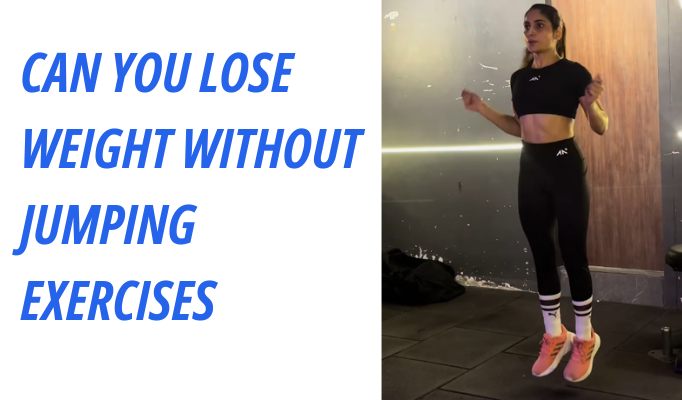
Let’s be honest, not everyone can jump. Maybe your knees ache every time you try a jumping jack. Maybe you live in an apartment, and your downstairs neighbor has already knocked twice. Or maybe you just genuinely hate the feeling of leaving the ground.
Whatever the reason, if you’ve been told that you need high-impact cardio to lose weight, that’s not the whole story.
The short answer is yes, you absolutely can lose weight without a single jump, hop, or plyometric move. Here’s why, and more importantly, how.
Why People Think Jumping Is Necessary

A lot of fitness content pushes jumping exercises because they’re efficient. Burpees, jump squats, and box jumps these moves spike your heart rate fast and burn a decent amount of calories in a short window. So they became a staple of “fat loss” workouts.
But here’s the thing: calorie burn is calorie burn. Your body doesn’t care how the calories were burned. What matters is the overall deficit, burning more than you consume over time. Jumping is one route to that. It’s not the only one.
What Actually Drives Weight Loss
Before getting into specific exercises, it’s worth stepping back. Weight loss comes down to a few core things:
- Consistently eating in a calorie deficit (this does the heavy lifting, no pun intended)
- Moving your body regularly in ways you can sustain
- Building or maintaining muscle, which keeps your metabolism from slowing down
- Getting enough sleep and managing stress, which affects hunger hormones more than most people realize
Notice that none of those say “do jumping exercises.” Movement matters, but the type of movement is way more flexible than most fitness content makes it seem.
Low-Impact Exercises That Actually Work
Walking (Seriously, Don’t Dismiss This)
Walking gets underestimated because it feels too simple. But a 45-minute brisk walk can burn 200–300 calories depending on your weight and pace. Do that five days a week and you’re looking at 1,000–1,500 extra calories burned without touching a jump rope.
The real advantage of walking? People actually do it consistently. It doesn’t wreck your joints, it doesn’t require recovery days, and you can do it almost anywhere. Consistency beats intensity every single time when it comes to long-term weight loss.
Cycling (Stationary or Outdoor)
Cycling is one of the best calorie-burning options for people who can’t jump. It’s easy on the knees, scalable in intensity, and you can make it as hard or as easy as you want. A moderate 30-minute ride can burn anywhere from 200 to 400 calories.
If you have access to a stationary bike, even better, you can watch TV, listen to a podcast, or zone out completely while getting a solid workout in.
Swimming
If you have pool access, swimming is almost unbeatable for low-impact fat loss. The water supports your joints while your whole body is working. It’s especially good for people with arthritis, back problems, or injuries that make land-based exercise painful.
One hour of moderate swimming can burn 400–600 calories. That’s on par with a lot of high-intensity jumping workouts.
Strength Training
This one surprises people, but lifting weights is genuinely one of the most effective tools for fat loss, and it involves zero jumping.
Here’s why it works: muscle tissue burns more calories at rest than fat tissue does. The more muscle you have, the higher your resting metabolic rate. So even when you’re sitting on the couch, a body with more muscle is burning more calories than one without.
Squats, deadlifts, rows, and presses, all of these can be done with no jumping and no impact. And the afterburn effect (calories burned after the workout is over) from strength training is real and significant.
Rowing Machine
The rowing machine is criminally underused in most gyms. It works your legs, back, core, and arms simultaneously, gets your heart rate up, and puts almost no stress on your joints. A 30-minute rowing session can burn 250–400 calories depending on effort level.
If you’re looking for a machine that gives you the most bang for your buck without impact, this is it.
Elliptical
The elliptical mimics the motion of running without the pounding. It’s a good middle ground if you want the feel of cardio without the joint stress. Not the most exciting piece of equipment in the gym, but reliable and effective.
Yoga and Pilates
These won’t torch calories the way cycling or rowing will, but they build lean muscle, improve flexibility, and perhaps most importantly, help manage the stress and cortisol levels that can make weight loss feel impossible even when you’re doing everything right.
If you’re someone who stress-eats or struggles with sleep, adding a yoga session or two per week might actually move the needle more than you’d expect.
A Sample Week Without Any Jumping
Here’s what a realistic, effective low-impact week could look like:
- Monday: 40-minute brisk walk + 20-minute strength training (lower body)
- Tuesday: 30-minute cycling session
- Wednesday: Rest or light yoga
- Thursday: 30-minute rowing machine + 20-minute strength training (upper body)
- Friday: 45-minute walk
- Saturday: Swimming or a longer bike ride
- Sunday: Rest
That’s a solid week of movement, no jumping, no pounding, no wrecked knees.
The Diet Side of Things
It would be dishonest to write an article about weight loss and not mention food. Exercise matters, but most research suggests that diet accounts for the larger share of weight loss results.
You don’t need to do anything extreme. Start by:
- Eating more protein (it keeps you full and supports muscle)
- Being mindful of liquid calories (drinks sneak in more than people realize)
- Cooking at home more often, where you control the portions and ingredients
- Not skipping meals, which usually leads to overeating later
Small, sustainable changes to eating habits will outperform any workout routine that you can’t stick to.
Who Should Definitely Avoid Jumping Exercises
If any of these apply to you, skipping the high-impact stuff isn’t just okay, it’s probably the smarter choice:
- Chronic knee, hip, or ankle pain
- Osteoporosis or low bone density
- Pregnancy or postpartum recovery
- Obesity, where joint stress is significantly higher
- History of stress fractures
- Living in a space where impact isn’t practical
There is no award for doing the harder, more painful version of exercise. The best workout is the one you can do consistently without hurting yourself.
The Bottom Line
Can you lose weight without jumping exercises? Yes, without question.
The fitness world has a habit of making things sound more complicated than they are. You don’t need to punish your body to lose weight. You need to move consistently, eat in a way that supports a moderate calorie deficit, build some muscle, and get enough sleep.
Jumping exercises are a tool. They’re not the only tool, and for a lot of people, they’re not even the right tool.
Find movement you can do regularly without dreading it or injuring yourself. That’s what actually works long-term, not any specific exercise trend.

I am Liam Brooks, a fitness writer passionate about simple home workouts, beginner-friendly fitness tips, and healthy daily habits. My goal is to make fitness easier, more practical, and accessible for everyone.