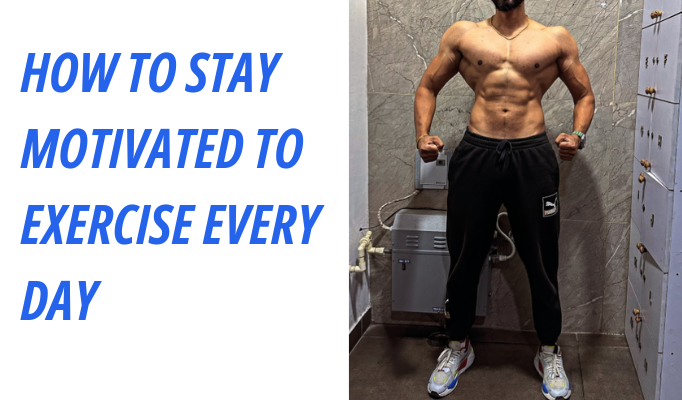
Let me be honest with you, there are mornings I wake up, and the last thing I want to do is move my body. The bed is warm, the day hasn’t started yet, and somehow the couch seems like a perfectly reasonable place to spend the next few hours. Sound familiar?
Staying motivated to exercise every day isn’t about being some kind of superhuman with iron willpower. It’s about understanding yourself well enough to keep showing up even on the days you really, really don’t want to.
Here’s what actually works.
Stop Waiting to “Feel Like It”
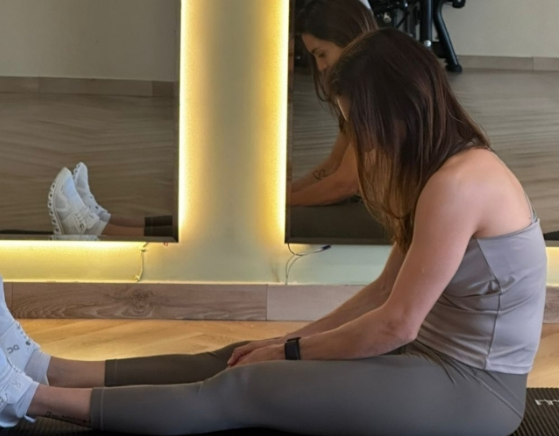
This is probably the biggest mistake people make. They wait until motivation strikes before lacing up their shoes. But motivation doesn’t work that way. It follows action; it doesn’t lead it.
Think about the last time you dragged yourself to a workout and felt terrible about it afterward. Probably never. You finish, you feel good, and suddenly you’re glad you went. That feeling doesn’t come before the workout. It comes because of it.
So instead of asking yourself Do I feel like exercising today, just start. Put on your shoes. Step outside. Tell yourself you’ll just do ten minutes. More often than not, you’ll do the full thing.
Make It Stupid Easy to Start
One of the smartest things you can do is reduce the friction between you and your workout. If you have to dig through a messy drawer to find your gym socks, set up your equipment, drive 20 minutes, and then find parking, you’ve already built five opportunities to quit before you’ve done a single rep.
Sleep in your workout clothes if you exercise in the morning. Keep your running shoes by the door. Choose a gym that’s on your way to work, not across town. These aren’t lazy shortcuts; they’re design decisions that make consistency easier.
Your future self is lazy. Plan for that.
Find Something You Actually Enjoy
Nobody tells you this enough: you don’t have to run if you hate running. You don’t have to do CrossFit. You don’t have to wake up at 5 AM and lift heavy things if that sounds like punishment.
Exercise is a broad category. It includes dancing, swimming, hiking, cycling, martial arts, yoga, pickleball, rock climbing, basketball, and a hundred other things. The best workout is the one you’ll actually do.
If you’ve been grinding through workouts you hate and wondering why motivation disappears, maybe the problem isn’t your discipline, it’s your choice of activity. Give yourself permission to try something different.
Attach Exercise to Something You Already Do
Habit stacking is one of the most underrated tools out there. The idea is simple: attach your new habit to something you already do automatically.
Maybe you always make coffee first thing in the morning. Could you do a 15-minute stretch or yoga session while it brews? Maybe you commute by transit, could you get off one stop early and walk the rest? Maybe your lunch break is 45 minutes, and you’ve been spending it scrolling your phone?
You’re not adding exercise to a full schedule. You’re replacing or extending something that already exists.
Track Progress, Not Perfection
There’s a difference between tracking your workouts and obsessing over them. What you want is a simple, visible record of your consistency, not a performance audit.
A basic wall calendar works brilliantly for this. Every day you exercise, you put an X on that date. After a week, you have a chain. After two weeks, the chain starts to feel important. You don’t want to break it.
This is sometimes called the “don’t break the chain” method, and it works because it shifts your focus from outcome (losing 10 pounds, running a 5K) to behavior (showing up). Outcomes take time. Behavior is something you control today.
Get an Anchor, Not Just Accountability
People say “find an accountability partner,” and while that can help, there’s something even better: an anchor. This is a person or commitment that ties you to a specific time and place.
A friend you meet at the park every Tuesday morning. A class you’ve already paid for. A dog that physically will not let you stay in bed. These aren’t just motivational boosts; they’re structural commitments that make skipping genuinely inconvenient.
Money works too. Paying for a class in advance stings more than you’d think. Humans are loss-averse. Use that.
Have a Plan for Bad Days
You will have days when it falls apart. Work gets crazy, you get sick, you travel, you sleep through your alarm, life happens. What separates people who maintain long-term fitness habits from those who don’t isn’t avoiding these days, it’s how they respond to them.
Have a minimum viable workout in your back pocket. Ten minutes of bodyweight exercises. A walk around the block. Five minutes of stretching before bed. Something small enough that “I was too busy” doesn’t apply.
One bad day is just one bad day. It only becomes a broken habit if you let it become two, then three, then a week. Give yourself grace, then come back tomorrow.
Reconnect With Your Why
When motivation slips, it usually means you’ve lost sight of why you started. And I don’t mean a surface-level why, like “I want to look better.” I mean the real one underneath that.
Maybe it’s that you want to keep up with your kids without getting winded. Maybe you watched a parent struggle with mobility, and you’re determined not to go down that road. Maybe exercise is the one hour of the day that belongs entirely to you, and you come back from it feeling like a person again.
Write that down. Literally. Put it somewhere you’ll see it on the hard days. When the alarm goes off at 6 AM and you’re negotiating with yourself, that’s the thing that cuts through the noise.
The Truth About Motivation
Motivation is real, but it’s not reliable. It shows up in waves, high sometimes, completely absent other times. The people who stay consistent long-term aren’t more motivated than you. They’ve just built systems that don’t depend on it.
Routine, simplicity, enjoyment, small wins, structural accountability, and a clear why these things carry you through the days when motivation is nowhere to be found.
Start small. Stay consistent. Give yourself room to be human. The rest follows.

I am Liam Brooks, a fitness writer passionate about simple home workouts, beginner-friendly fitness tips, and healthy daily habits. My goal is to make fitness easier, more practical, and accessible for everyone.