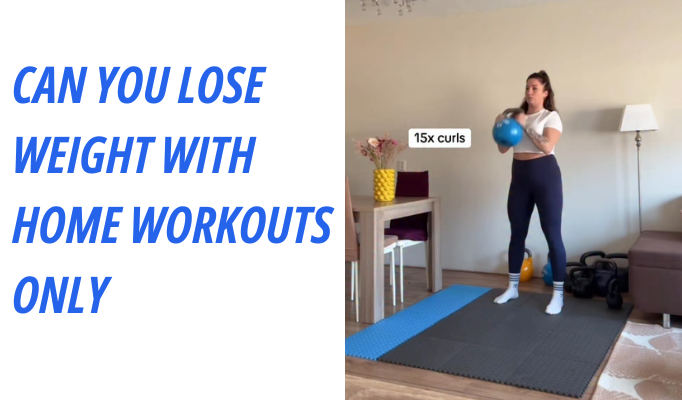
I’ll be honest with you, I used to think home workouts were just something people did when they couldn’t afford a gym membership. A consolation prize. You’d do a few jumping jacks in your living room, feel a little sweaty, and call it exercise.
Then life got busy. The commute to the gym felt like a second job. I started working out at home purely out of convenience, and something unexpected happened. I actually started losing weight.
So, can you really lose weight with home workouts only? Let’s get into it properly.
The Short Answer Is Yes, But There’s a Catch
You absolutely can lose weight without ever stepping inside a gym. But here’s the thing most fitness content glosses over: weight loss is mostly about energy balance. You need to burn more calories than you eat. Home workouts help you burn calories. But if your diet is a mess, no amount of burpees in your bedroom is going to fix that.
The people who fail with home workouts usually aren’t failing because of the workouts. They’re failing because they treat exercise as permission to eat more, or they don’t stay consistent, or they underestimate how hard they need to push themselves when there’s nobody watching.
That said, if you sort out those variables, home training is genuinely effective. Maybe even more effective for some people, because there’s no commute, no waiting for equipment, no self-consciousness. You just… do it.
What Actually Makes Home Workouts Work for Fat Loss
1. Intensity Matters More Than Location
A gym doesn’t burn fat. Effort burns fat. If you’re doing half-hearted stretches and calling it a workout, that’s the problem, not your living room floor.
High-intensity circuits, heavy bodyweight movements, and keeping rest periods short will get your heart rate up in ways that genuinely stress your body. That’s where fat loss happens. HIIT workouts done at home can burn a serious amount of calories in 20–30 minutes, sometimes more than an unfocused hour at the gym.
2. Progressive Overload Still Applies
This is where a lot of home exercisers plateau. They do the same 20 push-ups and the same 3 rounds of squats every week and wonder why nothing is changing after month two.
Your body adapts. You have to keep challenging it. That means adding reps, slowing down the tempo, reducing rest, adding resistance bands, trying harder variations (push-ups → archer push-ups → one-arm push-up progressions). You don’t need barbells to make your muscles work hard, but you do need to keep raising the bar, so to speak.
3. Compound Movements Are Your Best Friend
Isolation exercises are fine, but if you’re trying to lose weight and you’re working with limited equipment, compound movements do far more work per minute. Squats, lunges, push-ups, mountain climbers, bear crawls, and jump squats involve multiple muscle groups, spike your heart rate, and burn more calories in less time.
A 30-minute full-body circuit using only your bodyweight can be genuinely brutal if you design it right.
4. Consistency Beats Intensity (Over Time)
Here’s something the fitness industry doesn’t love to admit because it’s not exciting: showing up three to four times a week, every week, for six months beats any fancy training program you do for three weeks before giving up.
The advantage of home workouts is that the barrier to entry is almost zero. You roll out of bed, and you work out. No packing a bag, no driving, no waiting. That convenience compounds over time into real, lasting results.
The Equipment Question
You don’t need anything. Bodyweight alone is enough to lose weight, build a decent base of fitness, and feel significantly better in your body. But if you want to add a little something, a few cheap items make a big difference:
- Resistance bands: incredibly versatile, almost free, and great for adding tension to lower-body and pulling movements
- A pull-up bar: one of the best investments for upper body development at home
- Adjustable dumbbells: if your budget allows, these open up a lot of variety
- A jump rope: an underrated cardio tool that’s brutal in the best way
None of these is essential. But they help if you plan to train at home long-term.
What a Realistic Home Workout Week Looks Like
You don’t need to train six days a week. Frankly, most people overtrain in the first two weeks and then burn out completely. Three to four sessions a week, done well, are enough to see real change.
A simple structure that works:
Monday: Lower body focus (squats, lunges, glute bridges, step-ups)
Wednesday: Upper body + core (push-up variations, plank work, dips off a chair)
Friday: Full-body HIIT circuit (20–30 minutes, minimal rest)
Saturday (optional): Low-intensity movement: a long walk, yoga, or stretching
That’s it. Nothing revolutionary. But done consistently over 8–12 weeks with decent nutrition? People are always surprised by how much changes.
The Role of Diet Since We Can’t Ignore It
No article about weight loss is complete without saying this: you cannot out-exercise a bad diet. Not in a gym, and definitely not at home.
This doesn’t mean you need to obsess over every calorie or go on some miserable restriction plan. But it does mean being honest about what you’re eating. A few things that make the biggest difference without feeling like punishment:
- Eating enough protein (it keeps you full and preserves muscle while you’re losing fat)
- Not drinking your calories, juice, fancy coffees, and alcohol add up fast
- Eating mostly whole foods most of the time is not perfect, just mostly
- Not using your workout as justification to eat a massive meal
Sort those things out, and your home workouts will start producing very visible results.
Who Home Workouts Work Especially Well For
Honestly, home training works for most people, but it works especially well for:
- Busy parents who can’t reliably get to a gym
- Beginners who feel intimidated by gym environments
- People who travel frequently and need something that goes with them
- Anyone on a tight budget who doesn’t want to pay for a membership
- People who genuinely hate the gym atmosphere
If you fall into any of those categories, the gym was probably never your best option anyway.
Where People Go Wrong
Since we’re being real here, let me tell you the most common ways home workout plans fall apart:
They don’t track anything. You need some kind of record, even a note in your phone of what you did, how many reps, how it felt. Without tracking, you don’t know if you’re progressing or spinning your wheels.
They have no plan. Opening YouTube and picking a random workout every day is not a plan. You need a structure you can stick to for at least 6–8 weeks.
They stop when it gets hard. The first two weeks of any new routine feel awful. Your body is adjusting. Push through that initial discomfort, and things start to click.
They expect too much too soon. Weight loss is slow. Real, sustainable fat loss is roughly 0.5–1kg per week on a good run. If you’re expecting dramatic changes in two weeks, you’re going to be disappointed regardless of where you work out.
The Bottom Line
Can you lose weight with home workouts only? Yes, genuinely, completely yes.
The gym has equipment that can be helpful. But equipment doesn’t lose weight. Consistency, effort, smart programming, and a reasonable diet do, and none of those things require a membership card.
If you’ve been putting off starting because you don’t have access to a gym, or you can’t afford one, or you just don’t want to go, stop waiting. Your living room floor, 30 minutes, and a willingness to work hard are genuinely enough to get started.

I am Liam Brooks, a fitness writer passionate about simple home workouts, beginner-friendly fitness tips, and healthy daily habits. My goal is to make fitness easier, more practical, and accessible for everyone.