Let me be honest with you, I put off working out for almost two years because I thought I needed a gym membership to get results. I told myself I’d start “once things settled down,” once I could afford a membership, once I had the right shoes, once the weather was better. You know how that goes.
Then one day, I just dropped down and did some push-ups in my living room. And somewhere between that first awkward set and the weeks that followed, I realized I’d been making the whole thing way more complicated than it needed to be.
Here’s the truth: your body doesn’t care where you exercise. It just responds to effort.
Why No-Equipment Training Works Better Than Most People Think
There’s this assumption that bodyweight training is a “beginner thing,” something you graduate from once you get serious. That’s backwards.
Professional athletes use bodyweight movements year-round. Gymnasts build some of the most impressive upper body strength in the world without ever touching a barbell. Wrestlers, martial artists, and dancers all train with their own bodies as the primary tool.
The reason is simple: bodyweight exercises force your muscles to work together. A push-up isn’t just a chest exercise. Your core is bracing, your triceps are firing, your shoulders are stabilizing. Everything’s involved. That kind of full-body demand is actually harder to replicate with isolated machine work.
The Basics Movements That Form the Foundation
You don’t need a hundred different exercises. You need a handful of solid ones done consistently.
Push-Ups
Probably the most underrated exercise that exists. Most people either dismiss them because they seem too basic or they do them wrong and wonder why they’re not getting anywhere. Keep your body in a straight line, elbows at roughly 45 degrees, and go all the way down. The chest should nearly touch the floor. That’s a real push-up.
If you’re finding them too easy, elevate your feet. If they’re too hard, start from your knees, no shame in that, just build up.
Squats
Stand with your feet about shoulder-width apart, toes slightly turned out. Sit back like there’s a chair behind you, keep your chest up, and drive through your heels to stand. That’s it. The movement pattern is natural; it’s basically how humans have been sitting down for thousands of years.
Go slow on the way down. Most people rush squats, which defeats the purpose.
Lunges
Squats will build your legs. Lunges will reveal where you’re imbalanced. Most of us favor one side without realizing it, and lunges expose that pretty quickly. Do them walking if you have space, or stationary if you’re in a smaller area.
Plank
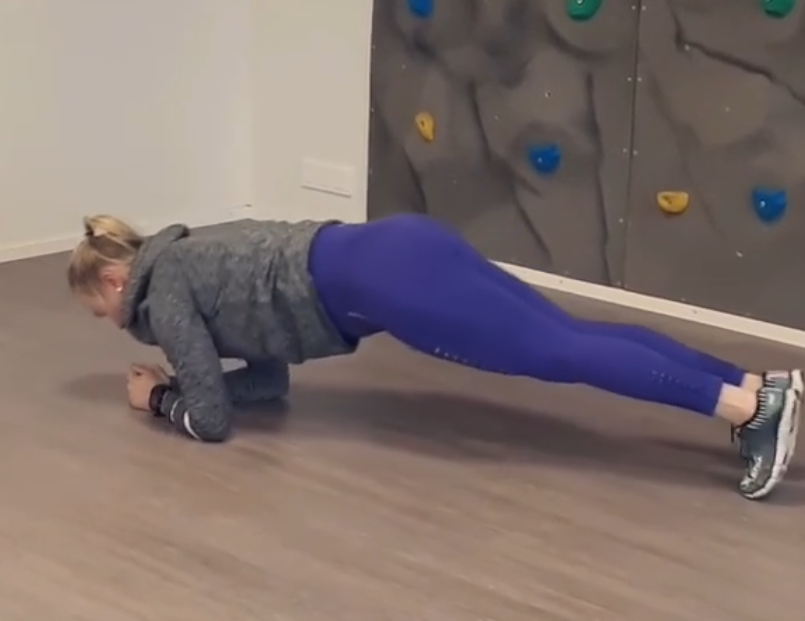
Not glamorous, not exciting, but your core is the foundation for everything else you do. A solid plank shoulders over wrists, hips level, glutes squeezed down for 30 to 60 seconds will tell you a lot about where your stability currently stands.
Hip Hinges and Glute Bridges
These tend to get skipped by people who don’t realize how much weak glutes contribute to lower back pain, poor posture, and lazy movement overall. Lie on your back, feet flat on the floor, and drive your hips up until your body forms a straight line from knees to shoulders. Hold for a second at the top. Feel that? That’s your posterior chain waking up.
A Simple Workout Structure That Actually Gets Used
The most effective workout plan is the one you’ll actually do. Here’s a structure that works without overcomplicating things:
Warm-Up (5 minutes)
- Arm circles, leg swings, hip rotations
- A few slow bodyweight squats just to get moving
- Light jumping jacks or high knees
Main Circuit (20–30 minutes)
Do each exercise for the listed reps or time, rest 30–60 seconds between exercises, and repeat the circuit 3 times.
- Push-ups 10 to 15 reps
- Bodyweight squats 15 to 20 reps
- Reverse lunges 10 reps each leg
- Plank 30 to 45 seconds
- Glute bridges 15 reps
- Mountain climbers 30 seconds
Cool-Down (5 minutes)
- Hip flexor stretch
- Hamstring stretch
- Child’s pose
- Chest opener
Total time: under 40 minutes. Three or four times a week is plenty.
Making It Harder Over Time
One thing people run into with bodyweight training is hitting a plateau and not knowing how to push past it. The key is progressive overload, the same principle as lifting, just applied differently.
Here’s how you do it without adding weight:
Slow things down. A push-up with a 3-second lowering phase is dramatically harder than one done quickly. Tempo training is one of the most effective and underused tools in bodyweight work.
Add a pause. Hold the bottom of your squat for two seconds. Hold the top of your bridge. Isometric holds recruit more muscle fibers than you’d expect.
Increase range of motion. Elevate your hands on a chair for push-ups so your chest goes lower. Step onto a stair for deeper lunges.
Move to harder variations. Push-ups → decline push-ups → pike push-ups → eventually working toward a handstand push-up if that’s your goal. Squats → jump squats → Bulgarian split squats → pistol squats. There’s always a harder version.
What People Get Wrong
Skipping the warm-up. Jumping straight into a circuit when your body’s cold is how you get little nagging injuries that derail you for weeks. Five minutes to get blood moving is not optional.
Training the same way every day. Your muscles need a reason to adapt, and doing the exact same workout repeatedly gives them less and less reason over time. Mix things up. Change the exercises, the tempo, and the rest periods.
Ignoring upper back and pulling movements. Push-ups, dips, and variations hit your chest, shoulders, and triceps well. But if you’re never pulling anything, your posture will start to show it. Without a pull-up bar, you can improvise: use a sturdy table for bodyweight rows, or resistance bands if you have them. It matters.
Expecting visible results in two weeks. Fitness doesn’t work like that. Strength and endurance changes happen relatively quickly — you’ll notice your workouts feeling easier within a few weeks. Visual changes in your body take longer and depend heavily on how you’re eating. Be patient with the mirror.
A Note on Consistency vs. Intensity
Here’s something worth sitting with: a moderate workout done three times a week for six months will always outperform an intense workout done sporadically.
The people who transform their bodies aren’t usually the ones who have had the hardest workouts. They’re the ones who showed up when they didn’t feel like it, who kept it simple when things got busy, and who treated fitness as part of their life rather than a project they’d get around to.
You don’t need perfect conditions. You need a floor and 30 minutes.
Final Thought
A full body workout without equipment isn’t a compromise. It’s not the “until I can afford a gym” version of fitness. For a lot of busy people, people who travel, people who just want to feel better and move well, it’s genuinely the best option.
Start with the basics. Do them consistently. Make them harder gradually. That’s the whole plan.
The gym can wait. Your living room floor is ready when you are.

I am Liam Brooks, a fitness writer passionate about simple home workouts, beginner-friendly fitness tips, and healthy daily habits. My goal is to make fitness easier, more practical, and accessible for everyone.